
Kandinsky Image Super Resolution 2.0: One-Step Image Super-Resolution
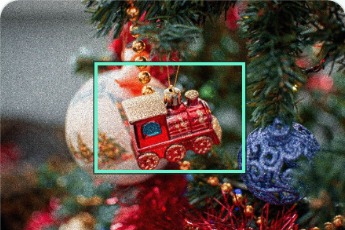
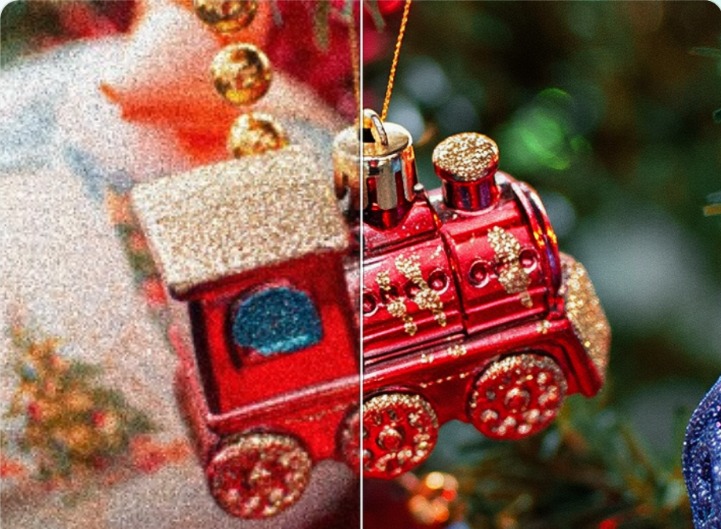
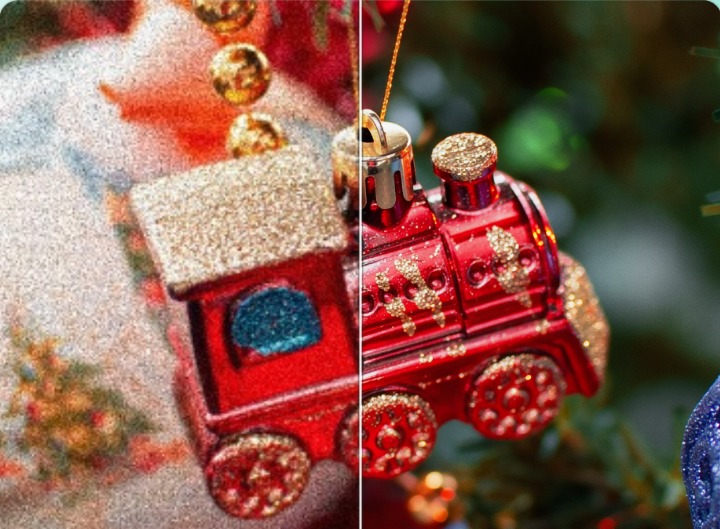
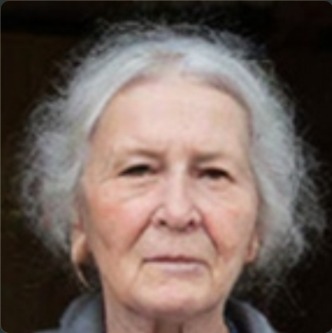
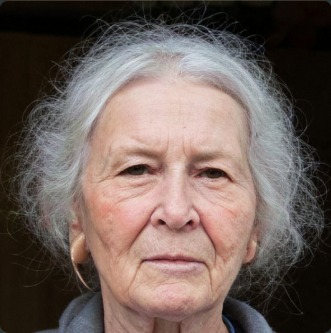
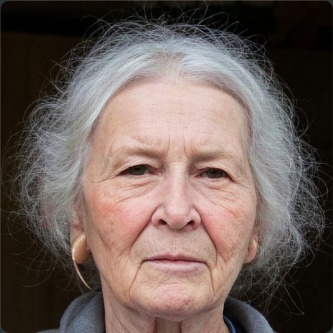
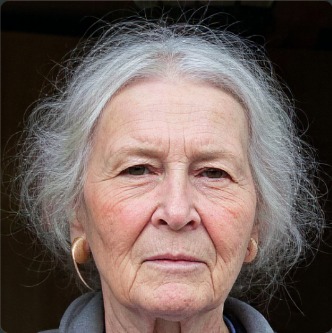
We are releasing Kandinsky Image Super Resolution 2.0, a super-resolution model that upscales images by ×2 or ×4 and restores fine detail such as hair, skin texture, fabric and small text. In the Kandinsky image pipeline, the base generator produces images at 1024 × 1024, and ImageSR 2.0 upscales them to 2048 × 2048 or 4096 × 4096. The model also works on its own for photographs and other images of any size and aspect ratio.
ImageSR 2.0 restores each 1024 × 1024 output tile in a single transformer pass, without a text prompt, and one checkpoint covers both ×2 and ×4. A creativity setting controls how much new detail the model adds: lower levels stay close to the input, higher levels give sharper and more detailed results.
Model Architecture and Inference
ImageSR 2.0 is a diffusion transformer fine-tuned from Kandinsky 5.0 T2I Lite. It works in the latent space of a frozen VAE. The input image is first upscaled to the target size with bicubic interpolation and encoded into a latent. The model then restores detail in one step: the transformer predicts a velocity v, and the restored latent zSR = zLQ − t · v is decoded by the VAE. The ×2 and ×4 modes differ only in the timestep t (0.15 and 0.244). Since no prompt is used, the released model replaces the text encoder and the cross-attention layers with precomputed tables, so no text model runs at inference.
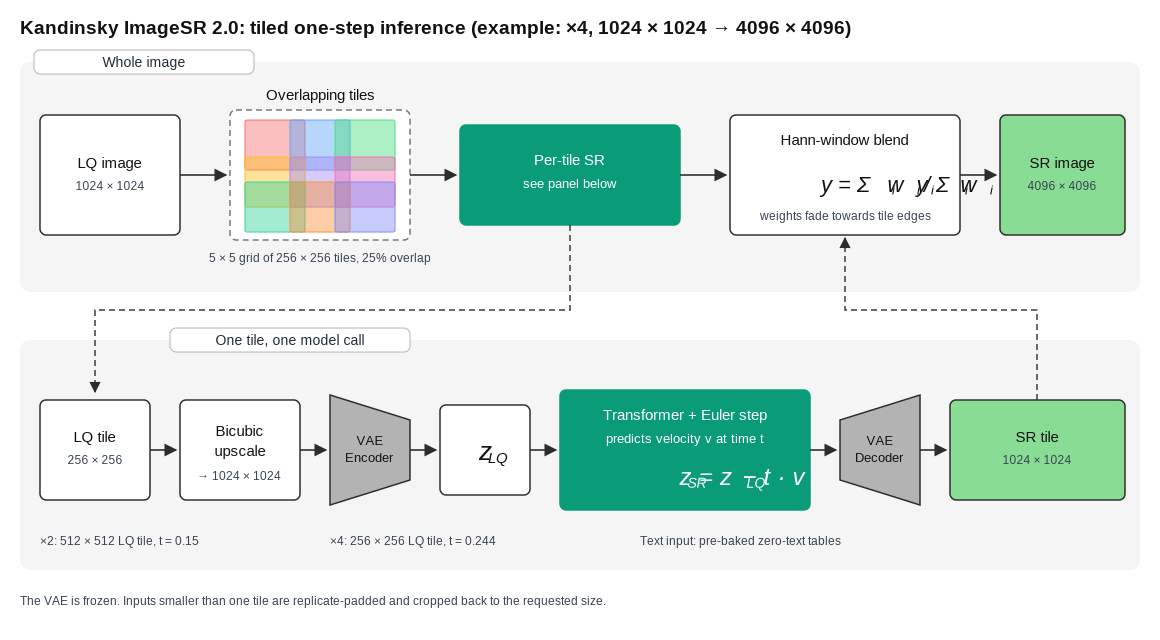
Images are processed in 1024 × 1024 output tiles. Larger images are split into tiles that overlap by 25%, each tile is processed independently, and the overlapping regions are blended with Hann-window weights to avoid visible seams. The tile grid is computed separately for width and height, so the output keeps the aspect ratio of the input. On a single NVIDIA H100, upscaling a 1024 × 1024 image takes about 2.8 s at ×2 and 7.8 s at ×4.
At inference, the creativity level can be set from 0 to 8 in both modes, with 4 as the default. Each level selects its own calibrated timestep t: lower levels keep the result close to the input, higher levels let the model add more fine detail.
Training
The model is trained on high-resolution images with faces, textures, text and architecture. Low-quality inputs are generated on the fly with a Real-ESRGAN-style degradation pipeline (blur, noise, downscaling, compression), edge-preserving degradations and degradations produced by a generative model, so one model handles both photographs and generated images. The ×2 and ×4 modes are trained jointly as one model.
The model is trained with an L1 loss between the output and reference pixels, the DISTS perceptual loss and an adversarial (GAN) loss. The discriminator is built on frozen DINOv3 ConvNeXt features with a trainable head and learns to tell real high-resolution images from model outputs. Two additional frequency-domain losses penalize periodic grid-like artifacts in the output.
The model weights and inference code are open-sourced under the MIT license, along with a Diffusers pipeline and an online demo.